
Spotlight on Our Spool: What I Learned by Stepping Away for Three Months
DC Bar Foundation CEO Kirra Jarratt shares her sabbatical story about letting go of productivity, restoring creativity, and building an organization that doesn’t depend on one person
Tell us about your sabbatical. How long was it? What did you "do" during your sabbatical?
I took three glorious months away from work—the longest stretch I’ve stepped away in more than 30 years.
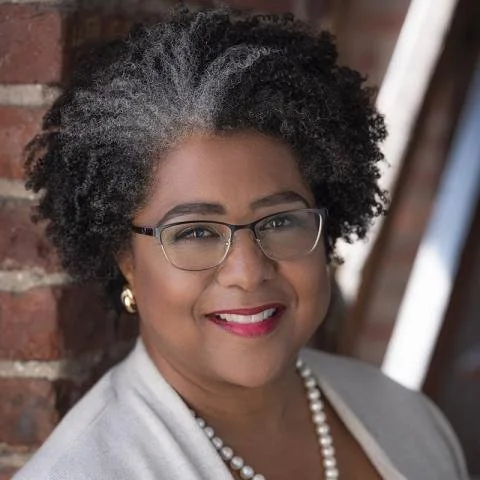
I spent time with my family. I rested. I went to museums and fed my creative spirit. I gardened, stitched, and binged mindless TV. I purged closets and the garage and let things go—both literally and figuratively. I went to the gym. I practiced restorative care. And I did not attend a single Zoom meeting.
At first, I thought I might tackle a long list of house projects. I quickly realized that the point wasn’t productivity—it was recovery. So I let the list go. That shift alone was freeing.
It was simple, quiet, and exactly what I needed. And it was incredible.
How did your sabbatical come to be? Did you initiate a conversation with your board? Did they bring it up? Does DC Bar Foundation have a sabbatical policy?
Years ago, I raised the idea of a sabbatical with our board at the DC Bar Foundation. Our mission is to expand access to justice to all DC residents— regardless of income, knowledge, or power. After navigating the turbulence of 2020, the COVID years, and more than a decade of leading the Foundation through significant growth, it felt both earned and necessary.
To their credit, the board was immediately supportive. They saw it not as time “away,” but as an investment in sustainability—mine and the organization’s.
Today, we offer “Appreciation Leave” to all staff. After five years, every employee receives a month away, two months after 10, and three months after 15 years. It’s one way we’re trying to institutionalize rest and renewal—not just for the CEO, but for everyone.
How did you plan for your sabbatical personally? Were you intentional about what you planned? Did you have "goals" for sabbatical?
Having grown the organization from five staff to 19, I’m used to feeling responsible for everything. That constant vigilance had become second nature. Letting it go was part of the real work of sabbatical planning.
About a month before the sabbatical began, I had started working through The Artist’s Way, which encourages small, daily creative practices and treating your creative life with intention. It helped me reframe the sabbatical not as time off, but as something closer to an artist’s residency.
At first, I considered traveling abroad or going to a formal retreat center. But then I realized: I didn’t need to go anywhere. I could create that residency at home. So that’s what I did. That was my only goal.
On the last day before the sabbatical began, I did a full release. I removed Teams, Outlook, Asana, Box—anything work-related—from my phone. I created an out-of-office message that explained my absence, directed people to the right members of the team, and made clear that all emails received during those three months would be deleted (best decision ever!).
How did you plan for your sabbatical professionally? What did you do to prepare your team and board for your time away?
We treated my sabbatical like any other business continuity exercise—with rigor and purpose.
Over six months, we worked with DRG Talent to map out plans for different types of leadership absences: planned leaves like a sabbatical, as well as unplanned emergencies or departures. Our board chair was involved throughout.
For my specific leave, I created a detailed transition plan: a spreadsheet outlining every major initiative happening during the three months, clear ownership for each, an Acting CEO designation, and compensation adjustments for increased responsibilities. We also agreed on the very limited circumstances that would warrant contacting me.
Two weeks before I left, I stopped taking external meetings and focused solely on handoffs. We tested systems and workflows to ensure business continuity.
I’m incredibly fortunate to have a team capable of stepping up. But that didn’t happen by accident. Sabbaticals only work when you’ve invested in leadership depth and delegation long before you need it.
What advice do you have for other organizations and leaders regarding sabbaticals?
Do it! And don’t treat it as a luxury—treat it as infrastructure.
A sabbatical is an opportunity to test your organization’s resilience. If one person’s absence causes everything to grind to a halt, that’s not a people problem—it’s a systems problem. Use the time to strengthen delegation, clarify decision rights, and build leadership capacity across the team.
Rested leaders make better decisions. And organizations that don’t depend on any one individual are healthier and more sustainable.
Sabbaticals aren’t stepping away from the mission. They’re how you stay in it for the long haul.
Given the times we are living in -- with constant assaults on our humanity, civil liberties, social justice, etc. -- why is it important for nonprofit leaders to prioritize sabbaticals and other forms of intentional rest (especially when our natural instincts might be to double down and push through)?
Nonprofit leadership asks something different of you than most jobs. It’s not just strategic or operational—it’s emotional and moral. Every day you are carrying other people’s crises, navigating broken systems, fundraising in uncertainty, and trying to move the needle on problems that feel bigger than any one organization.
Truth be told, you cannot advance the mission if you are exhausted. And so many of us are. Chronic depletion doesn’t make us more effective—it makes us reactive, short-sighted, and brittle. And losing a seasoned nonprofit leader to burnout isn’t just a personal cost; it’s an organizational and sector loss. Sabbaticals are not indulgences. They’re risk management and capacity strategy.
Nonprofit boards should be focused on sabbaticals just as intently as Executive Directors and CEOs.