
Spotlight on Our Spool: What We Learned from Merging Two Nonprofits
Live It Learn It Co-Executive Directors Erin McSpadden and Maryam Trowell share what they learned from merging two nonprofits—and what other nonprofit leaders should consider before joining forces.
In September 2026, two longtime Washington, DC-area nonprofits officially joined forces. Live It Learn It (LILI), which connects students with experiential learning opportunities beyond the classroom, merged with An Open Book Foundation (AOB), which brings books, authors, and illustrators directly to students.
Both organizations have spent years creating opportunities for children to explore, discover, and connect with the world around them. Now, they're bringing their complementary strengths together to create richer learning experiences and build a more sustainable future.
Thread Strategies has had the privilege of partnering with both organizations, including offering support as they explored the possibility of a merger. We recently caught up with LILI's Co-Executive Directors, Erin McSpadden and Maryam Trowell, to hear about the decision to merge, the challenges and surprises along the way, and their advice for other nonprofit leaders considering a similar path.
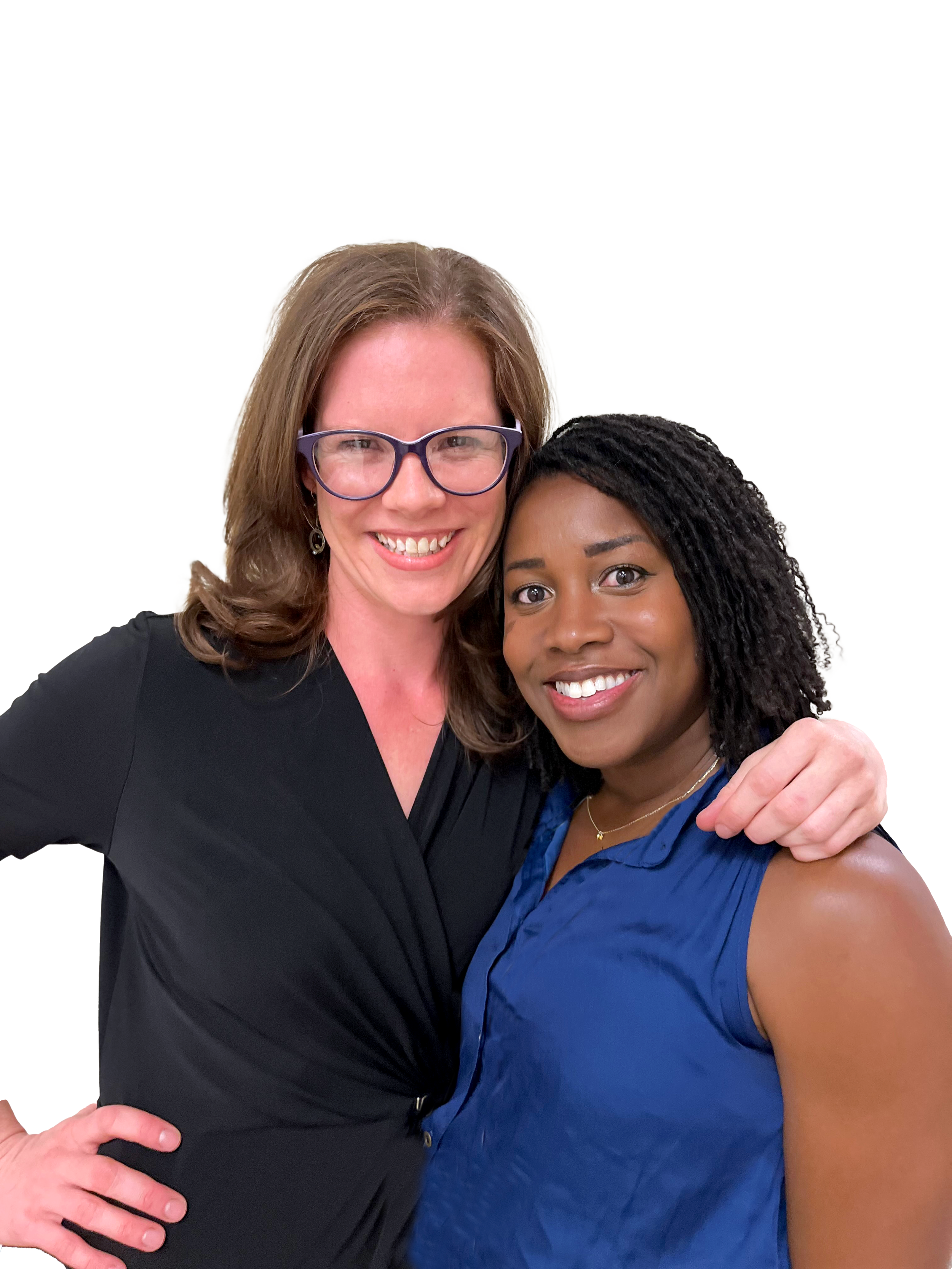
Erin McSpadden and Maryam Trowell, Live It Learn It’s Co-Executive Directors.
Thread: What first prompted the two organizations to explore a merger?
Erin: Heidi Powell, An Open Book Foundation's (AOB) Executive Director, approached us about a year ago as she was beginning to think about retirement and the future of AOB. We actually had our first conversation right before Thread's 10-year anniversary celebration, which is kind of cool!
Heidi really reached out at the best time. We were in the middle of the government shutdown, and programming at LILI was heavily affected by that, as Smithsonian and other cultural sites feature heavily in our field experiences. Additionally, the past few years have just been difficult for small nonprofits in the DC area, and we are always exploring ways to make our programming more sustainable and more flexible.
After that first conversation, I remember Maryam calling me when we got home that night, and we talked for about two hours. We were incredibly excited about the possibility.
Maryam: It wasn't as though we were sitting around thinking, “We should merge with another nonprofit!"“ Erin and I had already been having conversations about LILI's future, particularly how to expand our programming and make it less vulnerable to circumstances outside our control.
When Heidi approached us, there was an existing relationship, but there was also a very strong alignment. We deeply admired what AOB had built and believed its work fit brilliantly with what we did and what we believed all children should have access to.
We'd also collaborated on programming, worked in many of the same schools, and received funding together to explore more connected learning experiences. So when the possibility of a merger presented itself, it felt like a natural extension of work and conversations already underway.
Thread: What made the organizations such a good fit? What could you accomplish together that would have been harder independently?
Erin: We're similar enough to overlap in the right ways and different enough to complement each other, rather than one organization just swallowing up the other.
We serve similar audiences and both organizations offer experiential learning opportunities and chances for students to engage with different careers, cultures, art, and ideas. But each organization takes different pathways.
Our programs complement each other, too. An Open Book Foundation brings authors and illustrators into classrooms, while LILI takes students into the world to connect what they're learning with real experiences. And, just generally, we have similar vibes! Both teams are passionate about educational equity and care deeply about the work and each other.
Maryam: I spent 11 years teaching literacy and humanities, so I've always believed learning is more meaningful when students connect what they're studying to actual people, places, and experiences. And that’s what both organizations have been doing, just in different ways.
One of the best examples of what's possible was our collaboration at Miner Elementary. Through a shared project, students were able to connect a book and author residency with experiences at Great Falls and the Folger Shakespeare Library. They weren’t just reading about something and then moving on to the next lesson. They were exploring, writing, creating, asking questions, and making connections across all of those experiences.
I love the idea of students not only reading a story but having the opportunity to create their own story or become part of one. That's what excites me about bringing these organizations together.
Thread: What concerns did you have about the merger, and how did you work through them?
Erin: For AOB, there were understandable concerns about losing organizational identity, protecting staff, and maintaining programs. On the LILI side, we had questions about financial viability. We couldn't make a decision that would jeopardize our organization or team.
Our first step was making sure the math mathed. We looked at the finances and our respective funders to understand what a merger might mean.
We also had a lot of one-on-one conversations with Board members, supporters, and staff. Transparency is foundational to how Maryam and I lead. We wanted people to know what was happening as soon as we could share it, and we wanted to understand their concerns—even when we didn't yet have answers.
Maryam: I understood why AOB's Board wanted assurances about what would happen to something they'd spent 15 years building. The reality was that LILI would be the continuing organization, with Erin and me taking on leadership of AOB’s work. If I were on the other side of that decision, I’d want to know who these people were and what they were going to do with something I’d spent so much time building.
At one point, I wrote them a personal letter because I realized that, under different circumstances, they would have had the opportunity to get to know the candidates, their values, and their vision for the organization. The merger process didn’t create that same opportunity.
There were also difficult conversations about how to protect what mattered to each organization without making commitments that would ultimately make it harder for the combined organization to succeed.
That’s a distinction I think is really important. We wanted to preserve AOB’s identity, its programs, and its relationships. But we also had to make sure we weren’t creating a structure where decisions about staffing, governance, or programming would be dictated by what the organizations looked like before the merger, rather than what the organization needed moving forward.
We didn't always agree, and some conversations took longer than anticipated. We had to be specific about what we were committing to, what decisions belonged to the new Board, and what responsibilities Erin and I needed to retain as executive leaders.
Thread: What surprised you most about the process?
Erin: From a personal perspective, I found the operational and legal process to be a really cool professional experience. I'd never done anything like it before, but I felt like the skills I'd been developing throughout my career came together in this moment.
It also reinforced how much I love working with Maryam. She's one of the most intelligent and thoughtful people I've ever met, and she's so good at bringing people along with her. Our skills and working styles really complement each other, and that made a huge difference.
Maryam: I've joked that although I've never done a triathlon, I think a nonprofit merger might be the equivalent!
You’re trying to lead the organization that exists today, carrying out plans and commitments that were made before the merger was even a possibility, while simultaneously navigating an unfamiliar process and planning for a future organization that doesn’t quite exist yet.
I underestimated how much mental space that would occupy. It wasn't just getting two Boards to agree or signing legal documents. It was figuring out staffing, benefits, technology, finances, communications, and how we would actually operate together—all while continuing to deliver programs.
The merger became official in September, but the work of becoming one organization is very much still happening.
Thread: How did fundraising and long-term financial sustainability factor into the decision?
Erin: It was a huge part of it. Reviewing the financials was one of our first steps, and one of the first things we discovered was that we had surprisingly little overlap among our funders and major donors.
For our two organizations, the merger is an opportunity to collectively reduce overhead and operating expenses while broadening our income at the same time—with the caveat that it will be a few years before we see the full effects. There is a real cost to a merger, and our first collective fiscal year is actually pretty expensive, as we merge systems and wind down duplicative expenses.
Diversifying our income base has been a goal of LILI’s last two strategic plans. We've historically relied heavily on foundation funding, and over the past few years, that's become less reliable as funding priorities have shifted, including at the federal level. An Open Book Foundation brings a strong base of individual supporters, so the merger has the potential to diversify our income streams, which is an important step in organizational sustainability.
Maryam: I think it would be disingenuous to say finances weren't a significant part of the conversation. Of course they were.
But a merger doesn't automatically solve a sustainability problem. You don't take two organizations with financial or capacity challenges, put them together, and suddenly have one sustainable organization!
For me, sustainability is also about people. I don't want us to build an organization that can only function because everyone is constantly stretching themselves beyond what's reasonable. I’ve spent a lot of time thinking about what we can actually deliver well, what we need to stop doing, and how to build the capacity to support the things we want to do in the future.
The goal isn't simply to make the organization less expensive to operate. It's to build an organization that can continue providing meaningful opportunities for students and teachers without constantly operating at the edge of its capacity.
Thread: How have your donors and funders responded? What have you learned about communicating the merger?
Erin: So far, the response has been positive. We haven't had anyone tell us it was a horrible idea! People are interested in the potential, but they also have questions.
Our job is to make sure the vision and the potential are clear and that people continue to have ways to connect with us, get involved in the programs, and know that their passion and care for the work will be nourished in this new landscape.
One thing that I think was very helpful is that our Board (our current collective Board, as well as the pre-merger LILI and AOB Boards) has been invaluable in this work. They helped us think deeply not only about our plans but how we communicate and share our vision. People join Boards because they care about the organization and they often have very personal connections to the work. Having Board members review your ideas and your reasoning, and ask things like "What will happen to the program I love?" is incredibly helpful. You hear the concerns people might have right at the beginning of the process.
Maryam: It's still early. We've only been officially merged since September, and we're still bringing our donor communities together.
Funders don't give based solely on an organization's mission statement. They give because of relationships, experiences, and trust. We can't assume those relationships automatically transfer because there's a new organizational structure.
We're trying to communicate both what isn't changing and what could become possible. But we're also being careful not to promise things we haven't yet built the capacity to deliver.
Ultimately, the value of the merger is something we'll have to demonstrate, not just communicate.
Thread: What does success look like for the combined organization?
Erin: From my perspective overseeing development, finance, and operations, success means greater financial stability. I want us to build reserves and have funding that allows us to plan beyond one year at a time.
I'm also excited about our people and programs. The Miner Elementary project showed what can happen when books and real-world experiences reinforce each other. Students didn't just read about a "shaded canopy"—they walked beneath leafy branches and experienced it themselves.
And I'll definitely be happy when all our systems are fully aligned! Right now, we're managing two Salesforce platforms, merging financial systems, onboarding staff, and running year-end fundraising. It's a lot.
Maryam: I don't necessarily measure success by whether we've doubled the number of students or programs we serve.
Of course, we want to reach more students, especially those who have less access to opportunities. I'm more interested in the quality and depth of students’ experiences.
Are students making meaningful connections? Are they discovering new interests and seeing themselves in the stories they read and places they visit? Are they having moments that stay with them and shape what they believe is possible?
And are we making it easier for teachers to bring those opportunities to their students?
To me, success is building an organization that can sustain that kind of impact.
Thread: What advice would you offer other nonprofit leaders considering a merger?
Erin: Start with the money. Make sure you understand both organizations' finances and funding streams, including where they overlap.
Then, make sure you have people who can support you through this process. We were fortunate to have strong Boards, supportive teams, and an existing relationship with AOB. Our co-executive director model also made a huge difference. I could focus on the legal, financial, and operational work while Maryam led programming, staffing, and communications. Neither of us had to carry everything alone.
And bring in outside expertise! We had wonderful consultants, accountants, legal advisors, and other partners who helped us navigate the process. Tenner Consulting were our merger consultants. We brought them in to advise on strategy, facilitate conversations, and project-manage the merger. They've been a huge help in keeping everything on track, surfacing things we didn't know about, and making sure we keep moving on all the little logistical pieces that need to happen to bring this to fruition.
We also have great accounting, fundraising, and communications support. Both organizations received pro bono legal support. LILI applied through the DC Bar Pro Bono Center, and we were matched with Fried Frank. On the AOB side, they were represented pro bono by Venable. Both legal teams were vital in completing the formal process.
Finally, prepare for a lot. The legal merger is just one step. Once the paperwork is done, there's still so much to do.
Maryam: First, really think about what you're hoping a merger will accomplish. Not just what problems it might solve, but what becomes possible that wasn't possible before. And is merging actually the best way to accomplish that?
Be willing to look closely at the realities of both organizations, even when the answers are uncomfortable.
I'd also encourage leaders to think carefully about the difference between protecting an organization's legacy and making promises about what the future organization must look like.
And find other leaders who've been through a merger, and early! Erin and I are really fortunate to have each other, Heidi, and some wonderful people helping us. But we didn’t have a lot of people in our immediate circle who had actually been through this experience themselves.
Most importantly, remember that getting to the merger isn't the same thing as getting through the merger. We're still doing the work of becoming one organization.
But I'm really glad we pursued this. The opportunity to create richer, more connected experiences for students is absolutely worth the effort.