
Spotlight on Our Spool: What AI Can (and Can’t) Do for Grant Writing
Kathy Crutcher, Founder and Executive Director of Shout Mouse Press, shares how AI can be used to save time, strengthen proposals, and keep human strategy at the center
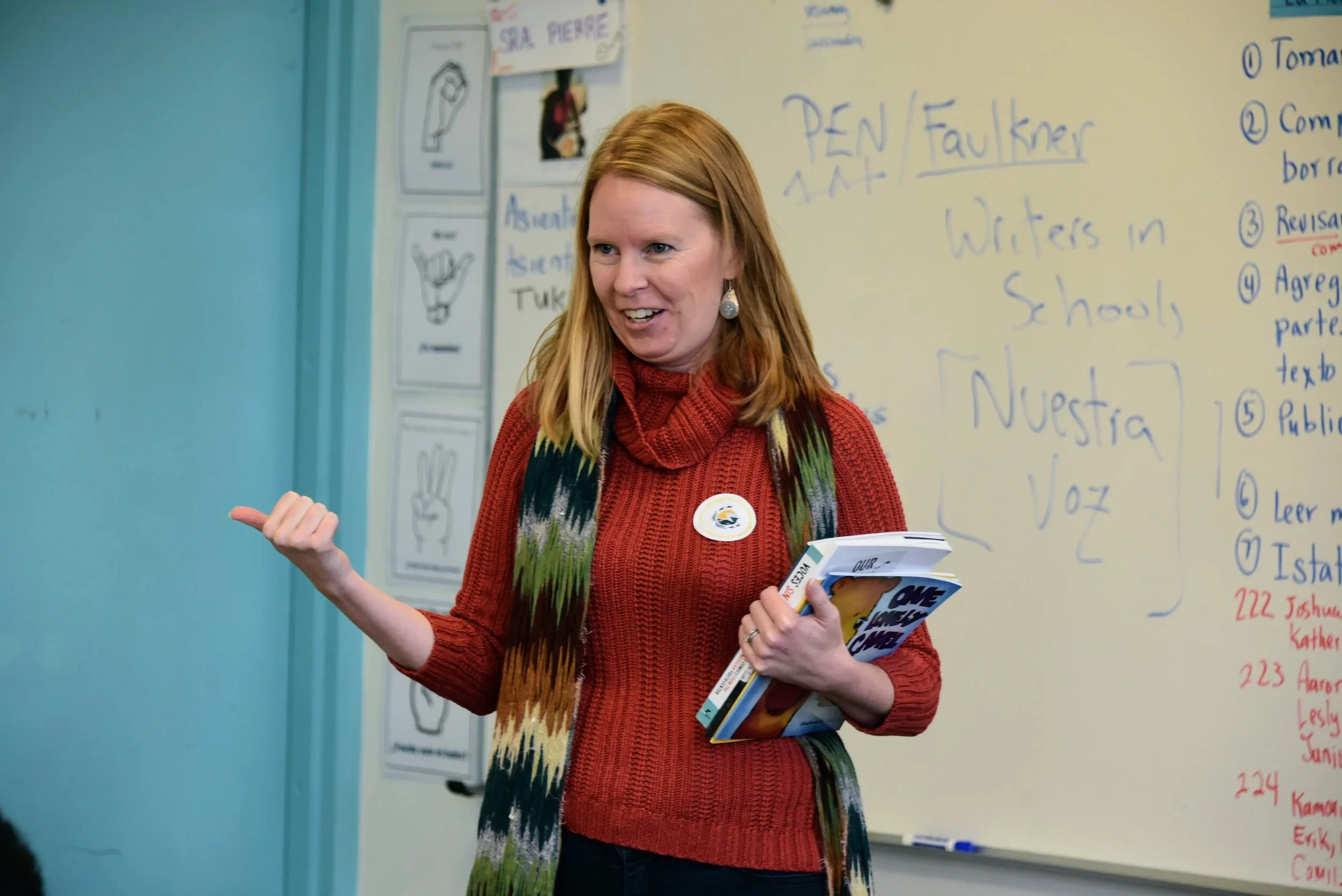
Based in Washington, DC, Shout Mouse Press is a nonprofit writing and publishing program dedicated to amplifying the voices of marginalized youth. Through writing workshops, book publication, and public speaking opportunities, Shout Mouse supports young people in telling their own stories and stepping into their roles as authors, leaders, and agents of change.
Shout Mouse Press is redefining what it means to center authentic voice in storytelling and communications. Its programs are grounded in the belief that the most powerful stories are those told by the people who live them. Thread began partnering with Shout Mouse Press in 2022, and we’ve consistently been impressed by its deep commitment to authenticity. Through its work, young people are supported in telling their stories in their own voices, rooted in lived experience.
Kathy Crutcher is the Founder and Executive Director of Shout Mouse Press.
Tell us about your use of AI in grant writing. When did you start using it? Why did you start using it? What platforms have you used?
We started using ChatGPT in our grant writing a couple of years ago. But we recently decided to transition to Claude because we think Anthropic's commitments around safety, transparency, and equity are more closely aligned with Shout Mouse Press’ mission. We're a few months in and Claude does some things better than ChatGPT, other things about the same, and a few things not quite as well — but we're still learning.
Now that you have been using AI tools for a while, in what parts of grant writing do you find AI to be most helpful?
The easiest win is using AI to quickly adapt language to fit those ever-changing word and character limits. Hallelujah! But AI is also helpful when drafting language about new programs — situations where I know what we're trying to do but haven't yet found the right words for a funder audience. On a good day, it almost functions like a thought partner: I bring the ideas and the context, and it helps me shape them into something coherent and compelling. That said, there are other days when it feels like an entirely different bot has shown up to work(!), so I’m still learning how to ensure consistent quality.
What parts of grant writing is AI least helpful for?
One of the areas where AI is least helpful in grant writing is handling program data with nuance, especially when it comes to aligning activities and metrics across varying grant periods. Many organizations have programs that evolve over time, with shifting timelines, outputs, and outcomes. In our experience, AI often struggles to accurately interpret and adjust those details. As a result, it can produce inconsistencies in numbers, timeframes, or how metrics are framed, which then require careful manual correction. This is the nature of AI only knowing what you tell it, and that we as staff will always be the ones who know this nuanced program data the best. This means that I always count on this part of grant writing taking up more of my time, as I will always need to closely review and refine any data-driven sections to ensure they accurately reflect the reality of the program and the specific grant period.
This is more of a wish than a complaint, but I'd love for AI tools to be better integrated with prospect research. I know some platforms are working on this, but we haven’t come across one yet that’s doing it well and accessible to us as a small organization. In theory, a tool that already knows our mission, our funding history, and what we're asking for should be able to help us identify aligned funders.
Knowing that Thread’s community consists mostly of nonprofit staff at organizations with small teams, what advice do you have for them as they approach using AI in the grant writing process?
The biggest thing I'd say is: it can be a genuine time-saver, but only if you're willing to invest upfront in learning how to use it well. You need to learn how to prompt clearly and specifically, and feed it good, accurate information about your organization. Like a CRM, AI is only as strong as what you put into it and how you know to get information out of it. If you go in with vague questions and no context, you'll get generic output that sounds like slop.
I'd also encourage people to think of AI as a drafting assistant, not a final author. You still need someone with institutional knowledge — ideally the person who knows your programs, your funders, and your voice — reviewing and editing everything before it goes out. The time savings are real, but you need a human leading the charge.
What measures do you take to protect your organization’s information and data when using AI?
In general we use AI tools cautiously and never input sensitive information. Donor data, financial records, and personal details are not shared with AI platforms. We follow standard nonprofit data practices—limiting access, using secure systems, etc.—to ensure confidentiality, accuracy, and responsible use.
Want to learn more about AI in fundraising? Reach out to Thread.